 Add to Chrome
 Add to Firefox
 Add to Edge
Learning to Adapt SFT Data for Better Reasoning Generalization
May 26, 2026
Large language models (LLMs) have achieved remarkable progress, with post-training playing a crucial role in enhancing their reasoning capabilities. Among post-training paradigms, supervised fine-tuning (SFT) is widely used: it leverages external data to provide dense supervision and enables efficient training. However, directly fine-tuning on expert data can hurt generalization when the data distribution is mismatched with the target model's own distribution. In this work, we propose Data Adaptation for Reasoning Tuning (DART), which formulates the use of a fixed, potentially distributionally misaligned SFT dataset as an optimization problem over demonstration transformations. DART trains a mapper model with reinforcement learning to convert original SFT data into model-adapted supervision that better matches the target model's distribution and learning preferences. The transformed data are then used for SFT, allowing the target model to better exploit external supervision. Experiments across multiple models and datasets show that DART improves generalization, achieves higher training efficiency than direct RL, and helps models surpass standard SFT. Our code is available at https://anonymous.4open.science/r/DART525E50D.

When Self-Belief Misleads: Active Label Acquisition for Reinforcement Learning with Verifiable Rewards
May 25, 2026Large Language Models (LLMs) have achieved remarkable advancements in reasoning capabilities empowered by Reinforcement Learning with Verifiable Rewards (RLVR). Nonetheless, RLVR intrinsically relies on ground-truth labels for reward computation, the acquisition of which is often prohibitively expensive in real-world scenarios. While unsupervised RLVR paradigms attempt to circumvent this by training on pseudo-labels, they are notoriously susceptible to training collapse. Moreover, different samples often exhibit varying annotation values. In this paper, we propose Reinforcement Learning with Active Verifiable Rewards (RLAVR), which actively acquires ground-truth labels for a small set of selected samples and integrates them with pseudo-labels, thereby stabilizing training dynamics and improving performance under limited annotation budgets. To identify valuable samples, we propose the Corrective Advantage Gap (CAG) metric and analyze the sample-level supervision value. Building on this, we introduce Correction-Aware Reliability Estimation for RLAVR (CARE), which translates the oracle CAG criterion into a practical pre-query acquisition policy to substantially improve training stability. Extensive experiments across diverse domains, model families, and model scales demonstrate the effectiveness and generality of our approach. Our code is available at https://github.com/Lumina04/CARE.
The Fourth Challenge on Image Super-Resolution ($\times$4) at NTIRE 2026: Benchmark Results and Method Overview
Apr 16, 2026This paper presents the NTIRE 2026 image super-resolution ($\times$4) challenge, one of the associated competitions of the NTIRE 2026 Workshop at CVPR 2026. The challenge aims to reconstruct high-resolution (HR) images from low-resolution (LR) inputs generated through bicubic downsampling with a $\times$4 scaling factor. The objective is to develop effective super-resolution solutions and analyze recent advances in the field. To reflect the evolving objectives of image super-resolution, the challenge includes two tracks: (1) a restoration track, which emphasizes pixel-wise fidelity and ranks submissions based on PSNR; and (2) a perceptual track, which focuses on visual realism and evaluates results using a perceptual score. A total of 194 participants registered for the challenge, with 31 teams submitting valid entries. This report summarizes the challenge design, datasets, evaluation protocol, main results, and methods of participating teams. The challenge provides a unified benchmark and offers insights into current progress and future directions in image super-resolution.
The Second Challenge on Real-World Face Restoration at NTIRE 2026: Methods and Results
Apr 12, 2026This paper provides a review of the NTIRE 2026 challenge on real-world face restoration, highlighting the proposed solutions and the resulting outcomes. The challenge focuses on generating natural and realistic outputs while maintaining identity consistency. Its goal is to advance state-of-the-art solutions for perceptual quality and realism, without imposing constraints on computational resources or training data. Performance is evaluated using a weighted image quality assessment (IQA) score and employs the AdaFace model as an identity checker. The competition attracted 96 registrants, with 10 teams submitting valid models; ultimately, 9 teams achieved valid scores in the final ranking. This collaborative effort advances the performance of real-world face restoration while offering an in-depth overview of the latest trends in the field.
NTIRE 2026 Challenge on Short-form UGC Video Restoration in the Wild with Generative Models: Datasets, Methods and Results
Apr 12, 2026This paper presents an overview of the NTIRE 2026 Challenge on Short-form UGC Video Restoration in the Wild with Generative Models. This challenge utilizes a new short-form UGC (S-UGC) video restoration benchmark, termed KwaiVIR, which is contributed by USTC and Kuaishou Technology. It contains both synthetically distorted videos and real-world short-form UGC videos in the wild. For this edition, the released data include 200 synthetic training videos, 48 wild training videos, 11 validation videos, and 20 testing videos. The primary goal of this challenge is to establish a strong and practical benchmark for restoring short-form UGC videos under complex real-world degradations, especially in the emerging paradigm of generative-model-based S-UGC video restoration. This challenge has two tracks: (i) the primary track is a subjective track, where the evaluation is based on a user study; (ii) the second track is an objective track. These two tracks enable a comprehensive assessment of restoration quality. In total, 95 teams have registered for this competition. And 12 teams submitted valid final solutions and fact sheets for the testing phase. The submitted methods achieved strong performance on the KwaiVIR benchmark, demonstrating encouraging progress in short-form UGC video restoration in the wild.
TAMTRL: Teacher-Aligned Reward Reshaping for Multi-Turn Reinforcement Learning in Long-Context Compression
Mar 23, 2026The rapid progress of large language models (LLMs) has led to remarkable performance gains across a wide range of tasks. However, when handling long documents that exceed the model's context window limit, the entire context cannot be processed in a single pass, making chunk-wise processing necessary. This requires multiple turns to read different chunks and update memory. However, supervision is typically provided only by the final outcome, which makes it difficult to evaluate the quality of memory updates at each turn in the multi-turn training setting. This introduces a temporal credit assignment challenge. Existing approaches, such as LLM-as-a-judge or process reward models, incur substantial computational overhead and suffer from estimation noise. To better address the credit assignment problem in multi-turn memory training, we propose Teacher-Aligned Reward Reshaping for Multi-Turn Reinforcement Learning (TAMTRL). TAMTRL leverages relevant documents as teacher signals by aligning them with each turn of model input and assigns rewards through normalized probabilities in a self-supervised manner. This provides fine-grained learning signals for each memory update and improves long-context processing. Experiments with multiple models of varying scales across seven long-context benchmarks show that TAMTRL consistently outperforms strong baselines, demonstrating its effectiveness. Our code is available at https://anonymous.4open.science/r/TAMTRL-F1F8.
Probing Scientific General Intelligence of LLMs with Scientist-Aligned Workflows
Dec 18, 2025Despite advances in scientific AI, a coherent framework for Scientific General Intelligence (SGI)-the ability to autonomously conceive, investigate, and reason across scientific domains-remains lacking. We present an operational SGI definition grounded in the Practical Inquiry Model (PIM: Deliberation, Conception, Action, Perception) and operationalize it via four scientist-aligned tasks: deep research, idea generation, dry/wet experiments, and experimental reasoning. SGI-Bench comprises over 1,000 expert-curated, cross-disciplinary samples inspired by Science's 125 Big Questions, enabling systematic evaluation of state-of-the-art LLMs. Results reveal gaps: low exact match (10--20%) in deep research despite step-level alignment; ideas lacking feasibility and detail; high code executability but low execution result accuracy in dry experiments; low sequence fidelity in wet protocols; and persistent multimodal comparative-reasoning challenges. We further introduce Test-Time Reinforcement Learning (TTRL), which optimizes retrieval-augmented novelty rewards at inference, enhancing hypothesis novelty without reference answer. Together, our PIM-grounded definition, workflow-centric benchmark, and empirical insights establish a foundation for AI systems that genuinely participate in scientific discovery.
MVU-Eval: Towards Multi-Video Understanding Evaluation for Multimodal LLMs
Nov 13, 2025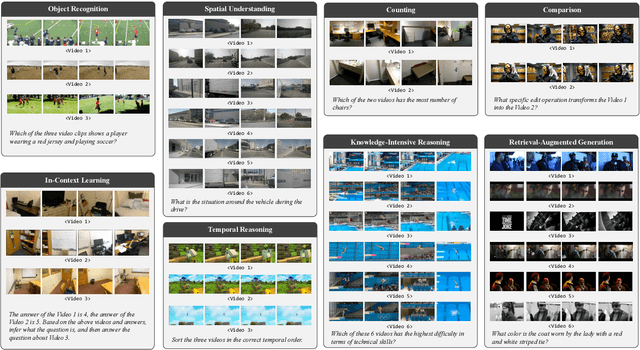
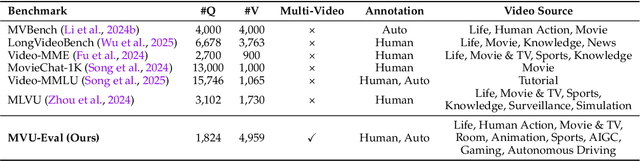
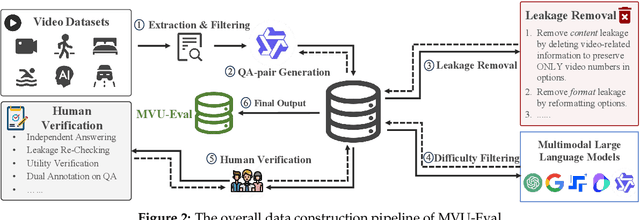
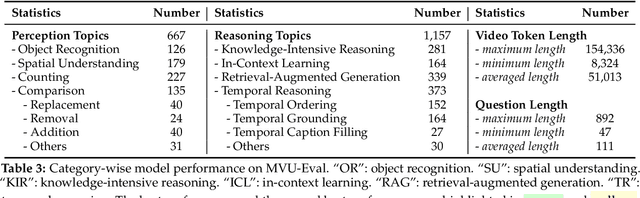
The advent of Multimodal Large Language Models (MLLMs) has expanded AI capabilities to visual modalities, yet existing evaluation benchmarks remain limited to single-video understanding, overlooking the critical need for multi-video understanding in real-world scenarios (e.g., sports analytics and autonomous driving). To address this significant gap, we introduce MVU-Eval, the first comprehensive benchmark for evaluating Multi-Video Understanding for MLLMs. Specifically, our MVU-Eval mainly assesses eight core competencies through 1,824 meticulously curated question-answer pairs spanning 4,959 videos from diverse domains, addressing both fundamental perception tasks and high-order reasoning tasks. These capabilities are rigorously aligned with real-world applications such as multi-sensor synthesis in autonomous systems and cross-angle sports analytics. Through extensive evaluation of state-of-the-art open-source and closed-source models, we reveal significant performance discrepancies and limitations in current MLLMs' ability to perform understanding across multiple videos. The benchmark will be made publicly available to foster future research.
Agent KB: Leveraging Cross-Domain Experience for Agentic Problem Solving
Jul 08, 2025As language agents tackle increasingly complex tasks, they struggle with effective error correction and experience reuse across domains. We introduce Agent KB, a hierarchical experience framework that enables complex agentic problem solving via a novel Reason-Retrieve-Refine pipeline. Agent KB addresses a core limitation: agents traditionally cannot learn from each other's experiences. By capturing both high-level strategies and detailed execution logs, Agent KB creates a shared knowledge base that enables cross-agent knowledge transfer. Evaluated on the GAIA benchmark, Agent KB improves success rates by up to 16.28 percentage points. On the most challenging tasks, Claude-3 improves from 38.46% to 57.69%, while GPT-4 improves from 53.49% to 73.26% on intermediate tasks. On SWE-bench code repair, Agent KB enables Claude-3 to improve from 41.33% to 53.33%. Our results suggest that Agent KB provides a modular, framework-agnostic infrastructure for enabling agents to learn from past experiences and generalize successful strategies to new tasks.
A Survey on Latent Reasoning
Jul 08, 2025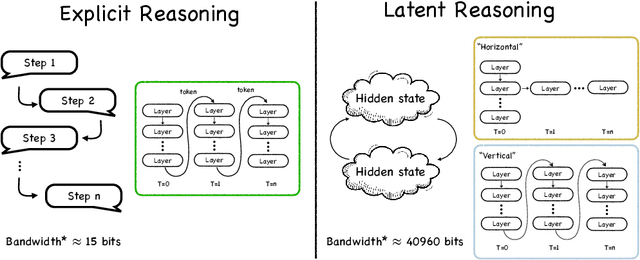

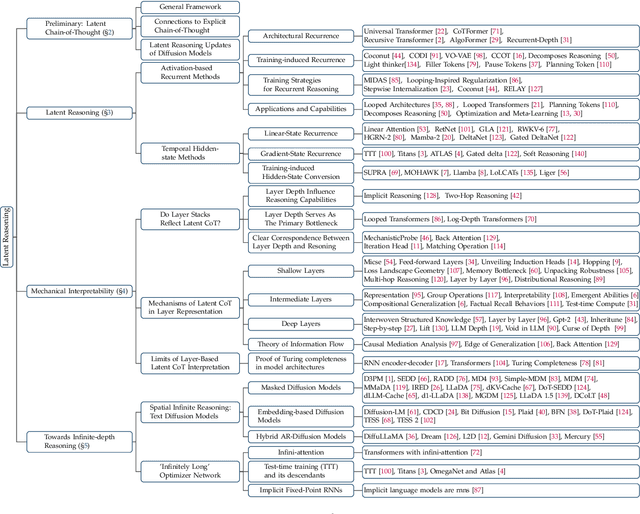
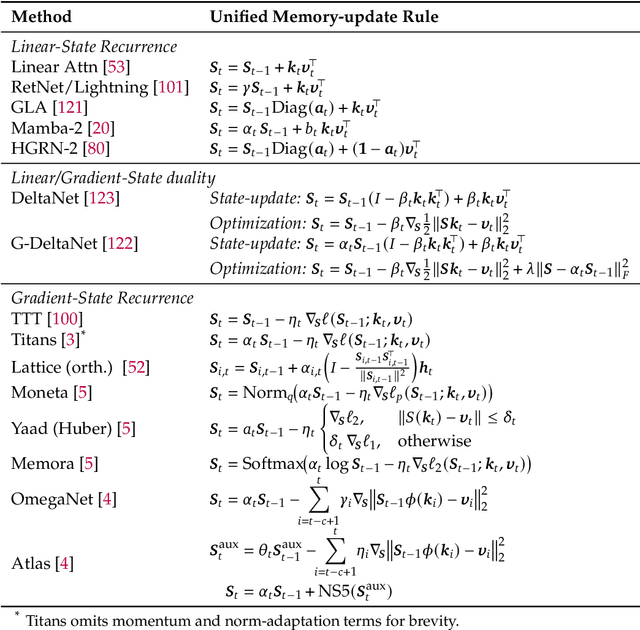
Large Language Models (LLMs) have demonstrated impressive reasoning capabilities, especially when guided by explicit chain-of-thought (CoT) reasoning that verbalizes intermediate steps. While CoT improves both interpretability and accuracy, its dependence on natural language reasoning limits the model's expressive bandwidth. Latent reasoning tackles this bottleneck by performing multi-step inference entirely in the model's continuous hidden state, eliminating token-level supervision. To advance latent reasoning research, this survey provides a comprehensive overview of the emerging field of latent reasoning. We begin by examining the foundational role of neural network layers as the computational substrate for reasoning, highlighting how hierarchical representations support complex transformations. Next, we explore diverse latent reasoning methodologies, including activation-based recurrence, hidden state propagation, and fine-tuning strategies that compress or internalize explicit reasoning traces. Finally, we discuss advanced paradigms such as infinite-depth latent reasoning via masked diffusion models, which enable globally consistent and reversible reasoning processes. By unifying these perspectives, we aim to clarify the conceptual landscape of latent reasoning and chart future directions for research at the frontier of LLM cognition. An associated GitHub repository collecting the latest papers and repos is available at: https://github.com/multimodal-art-projection/LatentCoT-Horizon/.